 Image 1 of 2
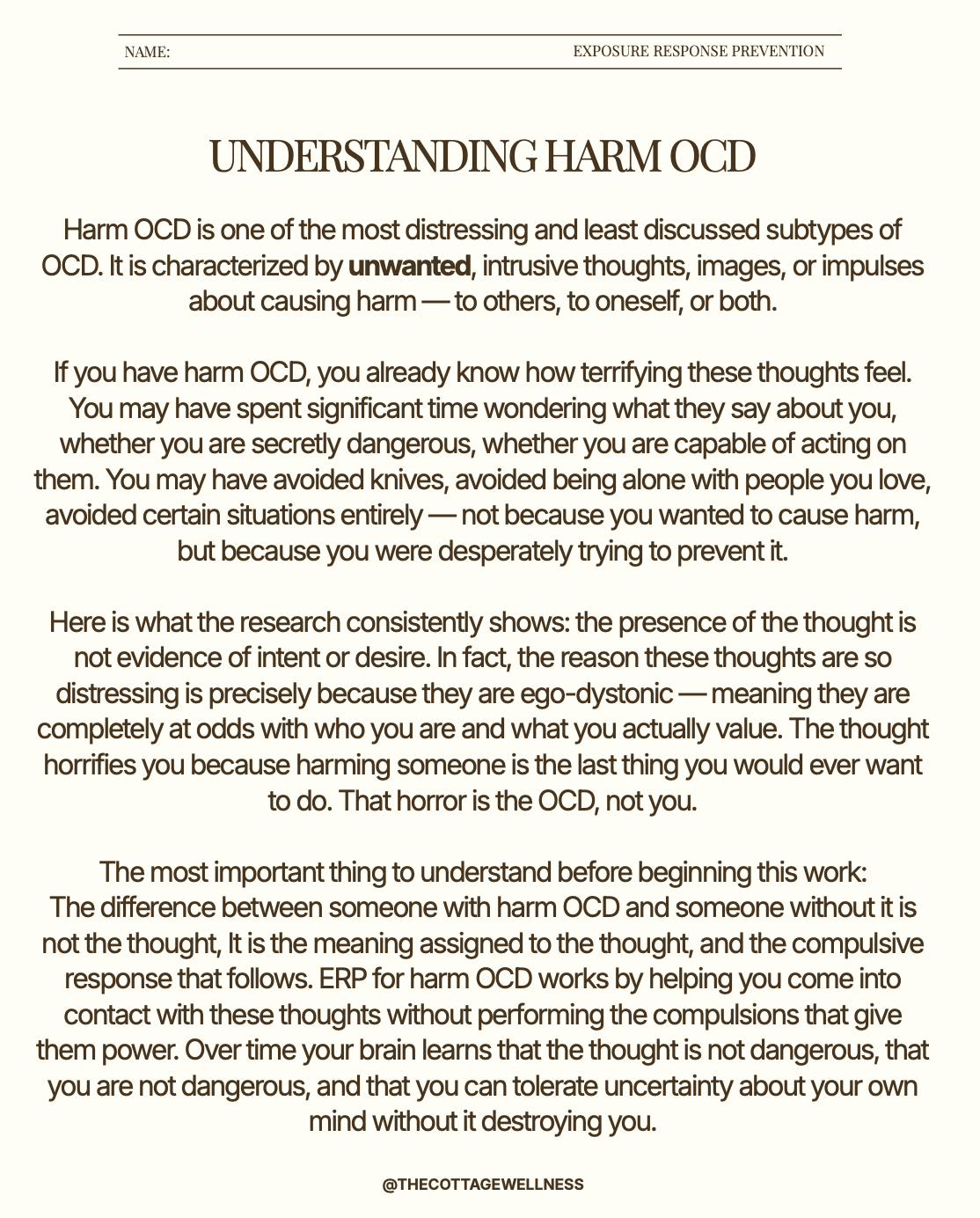 Image 2 of 2
If you have harm OCD, you have probably spent significant time wondering what your thoughts say about you. Whether you are secretly dangerous. Whether the thoughts mean something. They don't, and this worksheet will help you understand why — and what to do about it.
Built by a licensed therapist specializing in OCD, this is a comprehensive, clinically grounded ERP resource for both harm to others OCD and self-harm OCD. It covers the full picture — the psychoeducation, the hierarchy, the imaginal exposures, and the response prevention — in plain language that actually makes sense.
What's inside:
Psychoeducation section explaining the ego-dystonic nature of harm OCD.
A compulsions guide covering both harm to others and self-harm OCD presentations.
A long-term goals and values section connecting ERP work to what actually matters to you.
A comprehensive list of exposure examples covering both in vivo and imaginal exposures across both presentations.
A response prevention guide with specific attention to the mental compulsions that drive harm OCD.
This worksheet is for you if: You have harm OCD — intrusive thoughts about hurting others or yourself — and want a structured ERP tool, you are working with a therapist and want a resource to support your work between sessions, or you are a therapist looking for a clinically grounded harm OCD resource for clients.
Important clinical note: Self-harm OCD involves unwanted, ego-dystonic intrusive thoughts about self-harm that cause significant distress. They are clinically distinct from suicidal ideation. If you are uncertain whether what you are experiencing is OCD or genuine suicidal ideation, please speak with a licensed mental health professional before using this worksheet. If you are in crisis, please contact the 988 Suicide and Crisis Lifeline by calling 988.
This worksheet is for educational purposes only and is not a substitute for therapy or clinical treatment.
If you have harm OCD, you have probably spent significant time wondering what your thoughts say about you. Whether you are secretly dangerous. Whether the thoughts mean something. They don't, and this worksheet will help you understand why — and what to do about it.
Built by a licensed therapist specializing in OCD, this is a comprehensive, clinically grounded ERP resource for both harm to others OCD and self-harm OCD. It covers the full picture — the psychoeducation, the hierarchy, the imaginal exposures, and the response prevention — in plain language that actually makes sense.
What's inside:
Psychoeducation section explaining the ego-dystonic nature of harm OCD.
A compulsions guide covering both harm to others and self-harm OCD presentations.
A long-term goals and values section connecting ERP work to what actually matters to you.
A comprehensive list of exposure examples covering both in vivo and imaginal exposures across both presentations.
A response prevention guide with specific attention to the mental compulsions that drive harm OCD.
This worksheet is for you if: You have harm OCD — intrusive thoughts about hurting others or yourself — and want a structured ERP tool, you are working with a therapist and want a resource to support your work between sessions, or you are a therapist looking for a clinically grounded harm OCD resource for clients.
Important clinical note: Self-harm OCD involves unwanted, ego-dystonic intrusive thoughts about self-harm that cause significant distress. They are clinically distinct from suicidal ideation. If you are uncertain whether what you are experiencing is OCD or genuine suicidal ideation, please speak with a licensed mental health professional before using this worksheet. If you are in crisis, please contact the 988 Suicide and Crisis Lifeline by calling 988.
This worksheet is for educational purposes only and is not a substitute for therapy or clinical treatment.